

In an unexpected twist, General Motors (GM) faces a growing financial hurdle in 2026 as tariffs continue to erode its profits. CEO Mary Barra announced that the company expects a $3 billion to $4 billion dent in its profit margins due to the imposition of tariffs, primarily on its South Korean imports. This new financial burden comes on the heels of earlier estimates that had already seen tariffs slice into GM’s bottom line in 2025. Yet, despite these setbacks, GM’s commitment to electric vehicles (EVs) and strategic moves in production remain a core part of its resilience.
The Impact of Tariffs on GM’s Profit Margins
The financial squeeze from tariffs comes as GM works hard to offset higher production costs stemming from the trade policies of the Trump administration. In 2025, GM reported a substantial loss in potential profit, which was slightly alleviated when South Korea’s tariff rate on vehicles imported from there was temporarily lowered. However, President Trump’s recent statements about restoring tariffs on South Korean imports have added uncertainty to GM’s outlook for 2026. Should this restoration take place, GM’s costs could increase again, exacerbating the existing pressure on its profit margins.
GM has absorbed much of the cost associated with tariffs rather than passing it onto consumers. Despite increasing prices for some models, including a $2,000 hike on the Chevrolet Trax for 2026, the automaker has been cautious about raising prices across the board. GM’s incentive levels remain among the lowest in the industry, a strategy that has helped maintain competitive pricing despite tariff impacts.
A Shift Toward Domestic Production
To help reduce the financial burden of these tariffs, GM is accelerating its efforts to bring more production back to the U.S. Barra indicated that in 2026, GM expects to assemble over 2 million vehicles in the United States, positioning the company to become the top domestic producer. This strategy is seen as a direct response to tariff challenges and represents a clear shift away from reliance on foreign production, particularly for models like the Chevrolet Trax and other low-end vehicles that are significantly impacted by tariff rates.
Barra’s confidence in domestic production comes as a response to Ford’s claim as the “most American” of automakers. Ford’s sales figures for 2025 showed that it sold 2.2 million vehicles in the U.S., but GM believes it can outpace Ford’s numbers with its expanded domestic production plans. This shift not only addresses tariff issues but also reinforces GM’s broader strategy to reclaim market share in key segments.
Electric Vehicles: GM’s Bright Spot
Amid the tariff turbulence, GM is seeing steady growth in its electric vehicle sales, with nearly 100,000 EVs sold in 2025. Importantly, many of these sales were to first-time GM buyers, which GM views as a significant win. These new customers are likely to remain loyal to GM, particularly as they embrace the shift toward EVs.
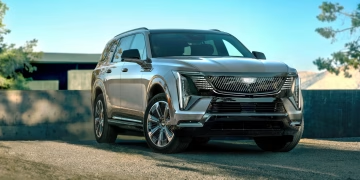
The launch of the Cadillac Escalade IQ in 2028 will mark a major step forward for GM’s EV lineup. This model will introduce GM’s next-generation lithium manganese-rich (LMR) battery technology, which reduces reliance on nickel and cobalt while improving the overall energy efficiency of the vehicle. GM’s plans for this vehicle show a keen understanding of the growing demand for more sustainable and cost-efficient electric vehicles, positioning the Escalade IQ as a flagship in the company’s EV push.
In line with its EV strategy, GM is also preparing to roll out a new electrical architecture in 2028 that will be shared across both its internal combustion engine (ICE) models and EVs. This new platform is expected to reduce production costs for GM’s EVs, making them more competitive in a crowded market. GM’s commitment to the future of electric mobility is also evidenced by its work with major tech companies like Google and Nvidia to advance autonomous driving technologies.
New Developments and Future Plans
Despite the tariff-related challenges, GM continues to innovate in its product offerings. The company has announced plans to phase out the Chevrolet Malibu and Cadillac XT4 by the end of 2026, with new models such as the Chevrolet Silverado and GMC Sierra set to replace them. This strategic shift is aimed at boosting GM’s inventory levels and positioning the company to capitalize on the growing demand for pickup trucks.
In an attempt to maintain a robust supply chain, GM plans to increase dealer inventory levels from 48 days to 50–60 days. This shift comes as the company adjusts to a more dynamic market, aiming to keep pace with changing consumer demands while navigating the challenges posed by tariffs and competition.
Challenges in Hybrid Technologies
While GM continues to make strides in the electric vehicle sector, it has yet to make significant inroads in hybrid vehicle development. Barra has acknowledged that GM has been less active in this area, and although the company is evaluating opportunities, it has not yet unveiled a comprehensive strategy for hybrid vehicles. As automakers continue to pivot toward electrification, GM’s slow pace in the hybrid segment might leave it at a disadvantage, particularly as rivals such as Toyota and Ford continue to make strides in this area.
Future Outlook
GM’s efforts to combat the impact of tariffs and increase its domestic production capabilities are certainly promising. The company’s focus on electric vehicles and innovation in battery technology shows that it is positioned to remain competitive in the rapidly evolving automotive market. However, the challenges posed by trade policies and the uncertainty surrounding tariff rates could continue to weigh heavily on the company’s bottom line.
With the U.S. EV market growing steadily and GM’s expanded production plans set to take effect, the company will be looking for ways to continue building on its success. While the tariffs present an obstacle, GM’s ability to innovate and adapt to changing market conditions will be critical to its future success.

