

Europe’s transition to cleaner mobility continued to advance in 2025, but not at the pace policymakers and automakers once anticipated. Battery-electric vehicles made notable gains across the continent, yet they remain well below the thresholds many had hoped would be reached by the middle of the decade. At the same time, hybrid vehicles strengthened their grip on the market, confirming that European consumers are still choosing flexibility over full electrification.
Data released in January by the European Automobile Manufacturers’ Association shows that battery-electric vehicles accounted for 17.4 percent of new passenger car registrations across Europe in 2025. While this marked a clear improvement from the previous year, it fell short of the levels required to comfortably align with longer-term emissions targets.
BEVs Grow but Miss Key Benchmarks
The steady rise in battery-electric vehicle adoption reflects growing consumer familiarity, expanding charging infrastructure, and a broader range of models entering the market. Even so, the 2025 share remains far from the 25 percent zero-emission benchmark that unlocks certain regulatory incentives under European Union frameworks.
Automakers are closely tracking these figures as they navigate evolving CO2 reduction policies. Although EU regulators have signaled some willingness to ease the pace of enforcement, manufacturers still face strong pressure to accelerate electrification. According to the industry association, current BEV penetration aligns with earlier projections but leaves limited room for complacency if the transition is to remain on schedule.
A late-year surge provided some momentum. Strong registrations in December lifted the annual average above the 13.6 percent recorded in 2024, underscoring how quickly market dynamics can shift when incentives, pricing, and availability align.
Hybrids Remain Europe’s Preferred Choice
Despite the growth in battery-electric cars, hybrids continued to dominate consumer preferences in 2025. Vehicles combining internal combustion engines with electric assistance captured 34.5 percent of the total European market, making them the single most popular powertrain category.
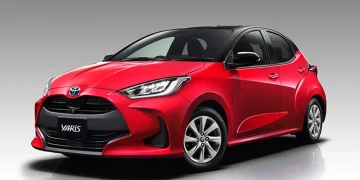
This trend highlights a pragmatic approach among buyers. Hybrids offer improved fuel efficiency and lower emissions without the range anxiety or charging concerns that still deter some drivers from fully electric vehicles. Models such as the Toyota Yaris Hybrid have become emblematic of this shift, performing particularly well in urban and suburban markets.
Plug-in hybrids also consolidated their position, benefiting from generous incentives in several countries and appealing to drivers who want limited electric-only capability without abandoning combustion engines entirely.
Country-Level Growth Tells a Mixed Story
Looking at individual markets, BEV growth was uneven but encouraging in several key regions. Germany recorded the strongest expansion, with battery-electric registrations rising by more than 43 percent. The Netherlands followed with an 18.1 percent increase, while Belgium and France posted growth of 12.6 percent and 12.5 percent respectively.
Together, these four markets accounted for roughly 62 percent of all battery-electric registrations in the European Union, with nearly 1.9 million new BEVs added in 2025. This concentration suggests that national policies, charging infrastructure maturity, and consumer incentives continue to play a decisive role in shaping adoption rates.
Hybrid registrations painted a similarly varied picture. Spain led growth with a 23.1 percent increase, followed closely by France at 21.6 percent. Germany and Italy also contributed solid gains, reinforcing hybrids as a pan-European phenomenon rather than a niche solution.
Plug-in Hybrids Gain Ground Rapidly
Plug-in hybrid electric vehicles emerged as one of the fastest-growing segments in 2025. Registrations surpassed one million units, pushing their EU market share to 9.4 percent, up from 7.2 percent the year before.
Some of the most dramatic growth came from southern European markets. Spain saw plug-in hybrid registrations more than double, while Italy and Germany recorded growth rates exceeding 60 percent. These figures reflect how policy incentives and urban driving patterns can accelerate adoption when infrastructure barriers are lower.
For automakers, plug-in hybrids continue to serve as a bridge technology, helping reduce fleet emissions while buying time to scale battery production and charging networks.
Internal Combustion Engines Continue to Decline
Traditional internal combustion powertrains experienced further contraction. Diesel sales suffered the sharpest drop, falling more than 24 percent to just 8.9 percent of total market share. This decline reflects tightening emissions standards, reduced consumer confidence in diesel technology, and lingering reputational damage from past emissions scandals.
Petrol-powered vehicles also lost ground. Although gasoline cars still accounted for more than a quarter of new registrations, their share fell to 26.6 percent from over 33 percent a year earlier. The downward trend underscores how electrified alternatives are steadily replacing conventional engines across most European markets.
Overall Market Weakness in Major Economies
While powertrain trends offer insight into consumer preferences, overall vehicle demand weakened significantly in several large European economies. France experienced the steepest decline, with total registrations dropping by 32 percent. Germany followed with a 21.6 percent fall, while Italy and Spain recorded decreases of 18.2 percent and 16 percent respectively.
These declines suggest that broader economic pressures, including inflation, higher interest rates, and uncertainty around future regulations, are weighing on car-buying decisions. For automakers, the challenge lies not only in shifting powertrains but also in stimulating demand within a cautious consumer environment.

