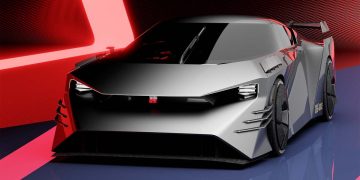


The new Nissan GT-R is officially in development, marking a decisive return for one of the most influential performance cars of the modern era. Nissan’s CEO has confirmed the project at the highest level, ending years of speculation and signaling a renewed commitment to enthusiast-focused engineering.
For a model that defined a generation, the announcement carries weight. The GT-R, often referred to as “Godzilla,” built its reputation on combining cutting-edge technology with accessible supercar performance. Its production run stretched across nearly two decades, leaving a legacy that few rivals could match.
A performance icon enters a new era
Nissan has made it clear that the new Nissan GT-R will not be a simple update or nostalgic reboot. Instead, it will be an entirely new vehicle designed to carry forward the model’s defining characteristics.
According to remarks reported by Motor1, the company intends to preserve the GT-R’s core identity. That includes its role as a flagship performance machine, capable of competing with far more expensive sports cars.
However, the context has changed. Emissions regulations, electrification, and evolving consumer expectations now shape every major automotive decision. As a result, the next GT-R is widely expected to adopt a hybrid drivetrain.
Such a move would not dilute the car’s identity. Instead, it reflects how performance itself is being redefined. Hybrid systems can deliver instant torque, improved efficiency, and enhanced traction, all of which align with the GT-R’s traditional strengths.
Hybrid power without compromise
The shift toward hybridization is likely to be one of the defining features of the new Nissan GT-R. While specific technical details remain undisclosed, industry analysts expect a combination of a high-performance internal combustion engine and advanced electric motors.
This approach mirrors broader trends across the high-performance segment. Brands such as Ferrari and Porsche have already demonstrated how hybrid systems can enhance, rather than diminish, driving dynamics.
For Nissan, the challenge will be balancing innovation with heritage. The GT-R has always been defined by precision engineering, advanced all-wheel drive, and relentless acceleration. Any hybrid system will need to complement these traits without adding unnecessary complexity or weight.
Expanding beyond a single flagship
Alongside confirming the new Nissan GT-R, the company’s leadership hinted at a broader ambition. Nissan is actively considering expanding its sports car lineup, potentially reintroducing more accessible performance models.
This represents a notable strategic shift. In recent years, many automakers have reduced investment in sports cars, focusing instead on SUVs and electric vehicles. Nissan’s willingness to revisit this segment suggests a recognition that brand identity still matters, especially among enthusiasts.
Two names immediately come to mind: Skyline and Silvia. Both models hold strong cultural and historical significance, and their potential revival would complement the GT-R’s return.
A modern Skyline could bridge the gap between luxury and performance, while a revived Silvia might target a younger audience with a lightweight, affordable sports car. Although no official confirmation has been given, the possibility alone has generated considerable interest within the automotive community.
Market pressures and brand identity
The development of the new Nissan GT-R comes at a time when the global automotive industry is undergoing rapid transformation. Electrification, stricter emissions standards, and shifting consumer preferences are reshaping product strategies across the board.
Yet, performance cars continue to play a critical role in defining a brand’s identity. They act as technological showcases and emotional anchors, drawing attention even when they represent a small portion of total sales.
Nissan appears to be recalibrating its approach. By investing in a new GT-R while exploring additional sports models, the company is signaling that performance remains a core pillar of its future.
This strategy could also have commercial benefits. Enthusiast vehicles often generate strong brand loyalty, which can translate into broader customer engagement across the lineup.
What to expect next
Details about the new Nissan GT-R remain limited, and the timeline for its release has not been confirmed. However, the acknowledgment of the project at the executive level suggests that development is well underway.
Industry observers expect further announcements in the coming years, potentially including concept previews or technical insights. These early signals will be closely watched, as they will reveal how Nissan intends to position the GT-R in an increasingly competitive and electrified market.
The broader question is how far Nissan will go in rebuilding its performance portfolio. If the GT-R returns alongside revived nameplates like Silvia or Skyline, the company could reestablish itself as a major force in the sports car segment.
For now, the confirmation alone is enough to shift the conversation. The new Nissan GT-R is no longer a rumor. It is a strategic project that reflects both the challenges and opportunities facing modern performance engineering.
As the automotive landscape evolves, one thing remains clear. The demand for driving excitement has not disappeared. It is simply being reimagined, and Nissan intends to be part of that transformation.
READ: Nissan Chery Partnership Talks Boost UK Plant Prospects