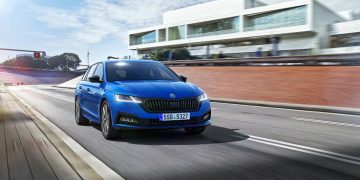


Skoda China Exit marks a dramatic turning point for the Czech automaker after years of declining sales in the world’s largest car market. As a result, the decision underscores how quickly global brands can lose ground in China’s fast-evolving automotive landscape.
Skoda Auto once relied heavily on China as its biggest market. However, demand began to weaken toward the end of the last decade. Over time, rising competition from local manufacturers intensified pressure. Consequently, parent company Volkswagen Group has decided to withdraw the brand from China, with sales expected to end by mid-year.
The numbers clearly illustrate the scale of the Skoda China Exit. In 2018, the company delivered 341,000 vehicles in China, marking its peak. By 2025, deliveries had dropped to just 15,000 units. Therefore, the brand experienced a staggering decline of nearly 96 percent within seven years.
Year – Sales in China
2025 – 15,000
2024 – 17,500
2023 – 22,800
2022 – 44,600
2021 – 71,200
2020 – 173,000
2019 – 282,000
2018 – 341,000
2017 – 325,000
2016 – 317,100
This steep decline reflects a broader shift in China’s auto market. In recent years, domestic automakers have expanded rapidly. They have introduced competitively priced vehicles with advanced technology. As a result, traditional foreign brands have struggled to keep pace.
The Skoda China Exit highlights the growing dominance of Chinese manufacturers. Companies such as BYD and Geely have reshaped the market with aggressive pricing and strong electric vehicle offerings. Consequently, global brands now face intense competition across all segments.
At the same time, consumer preferences in China have shifted. Buyers increasingly favor electric vehicles and smart features. Local brands often lead in these areas. Therefore, foreign automakers must adapt quickly or risk losing relevance.
Despite its struggles in China, Skoda has found success elsewhere. In 2025, the brand became the third best-selling carmaker in Europe for the first time. In addition, demand in India reached record levels. The company also gained traction in North Africa and Turkey.
Globally, Skoda recorded strong growth. Sales increased by 12.7 percent, reaching over one million units. This marked its best performance in six years. Therefore, the Skoda China Exit does not signal a global decline but rather a strategic shift.
Looking ahead, Skoda is investing in new products. The company plans to launch an entry-level electric vehicle, the Epiq. Later, it will introduce a larger seven-seat model, the Peaq. These developments reflect a broader push toward electrification.
Meanwhile, the Volkswagen Group continues to adapt its China strategy. While it is withdrawing Skoda, it is strengthening its core brand and partnerships with local players. In addition, it has introduced a new luxury venture linked to Audi. However, early signs suggest that even these efforts face challenges.
The Skoda China Exit raises important questions about the future of foreign automakers in China. The market remains highly competitive and rapidly evolving. Therefore, companies must continuously innovate to stay relevant.
In addition, the shift highlights the importance of local adaptation. Success in China now depends on understanding consumer preferences, investing in technology, and competing on price. Without these elements, even established brands can lose market share quickly.
Looking forward, the long-term outlook remains uncertain. Some legacy automakers may continue to thrive by adapting to local conditions. Others may struggle to maintain their position. As a result, the competitive landscape will likely keep changing.
Ultimately, the Skoda China Exit serves as a powerful reminder. Even strong global brands can face rapid decline in a dynamic market. At the same time, it shows that strategic repositioning can help companies find growth in new regions.