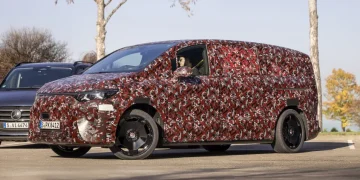


The Mercedes VLE arrives March 10 with game-changing features that transform how drivers navigate tight urban spaces. This all-new electric people-carrier replaces the EQV with bespoke technology derived from Mercedes’ latest passenger vehicles. Consequently, the luxury MPV segment gains a serious contender capable of autonomous parking and remarkably agile maneuvering.
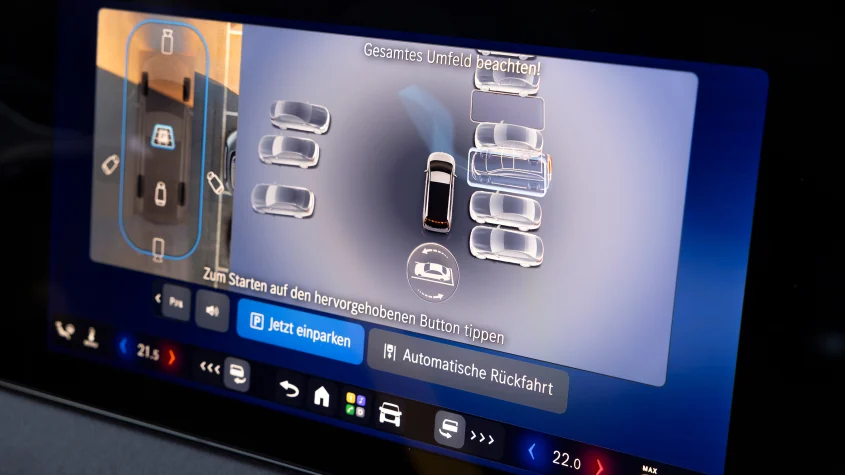
Imagine watching a massive vehicle parallel park itself while you sit back and watch. The Mercedes VLE makes this reality through its fully-autonomous parking assistant. Auto Express tested a covered prototype in Germany, observing the system quickly recognize available spaces both ahead and behind the vehicle. No need to drive past a spot before selection. The large central display, similar to the new Mercedes CLA, provides clear instructions before maneuvering the van seamlessly into position.
Speed and user interface typically limit these systems, yet the Mercedes VLE addresses both concerns effectively. A reversing assistant feature rewinds all steering inputs, extracting the vehicle from dead ends or nose-in parking situations effortlessly. This technology proves particularly valuable for a vehicle of this size.
Rear-wheel steering represents another breakthrough for the V-Class lineage. The system achieves a seven-degree angle, reducing the kerb-to-kerb turning radius to just 10.9 meters. That figure matches the much smaller CLA saloon, remarkable for a people-carrier. While not as extreme as some Mercedes saloons offering up to 10 degrees, this capability ensures easy and agile handling even in tight corners, as demonstrated during testing on Rome’s streets.
The Mercedes VLE sits on Mercedes’ new VAN.EA platform, marking the first model built on this bespoke electric architecture. Mercedes describes this as ushering “a completely new era” for luxury vans. The platform delivers 115kWh usable battery capacity, 25kWh more than the previous EQV. Long-distance testing covered 683 miles from Stuttgart to Rome with just two 15-minute charging stops. Consequently, expected range exceeds 300 miles, a substantial improvement.
Technical capabilities drawn from Mercedes’ passenger electric cars include an 800V electrical system enabling up to 320kW fast charging. High-end suspension and chassis technology further differentiate the Mercedes VLE from commercial vans. Buyers can choose between single-motor rear-wheel drive or dual-motor all-wheel drive configurations, providing flexibility for different applications.
Mercedes previously announced the VAN.EA technology enables “clear differentiation” between luxury and commercial models. The VAN.EA-P platform (premium) caters to high-quality family vans and exclusive VIP shuttles. Commercial vans will use the separate VAN.EA-C setup. This strategic separation ensures the Mercedes VLE maintains its luxury positioning.
Design teasers reveal headlight units similar to the new GLC and CLA, featuring three-pointed-star daytime running lights. A large illuminated grille dominates the front end. Wind tunnel testing demonstrated “outstanding” aerodynamic efficiency, while Nardo test track sessions fine-tuned high-speed dynamics. Proportions remain similar to the EQV, though the Mercedes VLE benefits from entirely new underpinnings.
The vehicle will be “always on,” connected to the internet continuously for over-the-air updates. Level 2 automated driving comes standard, with Level 3 automation planned by decade’s end. Interior technology likely features a massive full-width screen replacing the traditional dashboard, utilizing the latest MB.OS infotainment system seen in recent electric GLC and CLA models.
Pricing details await official confirmation, though expectations point toward £90,000 starting, rising above £100,000 for highly specified models. The current EQV starts from £87,035 with less space and older technology. The Mercedes VLE essentially serves as the mid-size MPV, akin to an E-Class with seating for up to eight people.
A larger VLS model arrives later, positioned as a “grand limousine” defining its own unique luxury segment. Additionally, Mercedes announced petrol-powered VLE variants will follow the electric model, sitting on the VAN.CA platform described as “state-of-the-art.” Both versions roll off the same assembly line in Vitoria, Spain.
The luxury MPV market intensifies with competitors including the Lexus LM, Volvo EM90, and Zeekr 009. The Mercedes VLE enters this burgeoning segment with distinctive advantages: autonomous parking, rear-wheel steering, 300-mile range, and premium technology. These features address practical concerns while delivering the refinement expected from Mercedes-Benz.
For those unable to wait until March, the current Mercedes EQV remains available through various dealerships. However, the Mercedes VLE represents a significant technological leap forward, combining luxury, practicality, and cutting-edge electric vehicle innovation in one compelling package.

