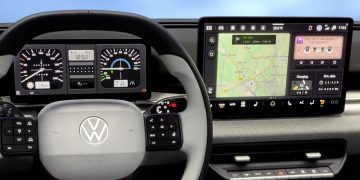


Volkswagen has responded to widespread customer feedback by bringing buttons back to the ID. Polo. After years of relying heavily on touchscreens for vehicle controls, Volkswagen has shifted its approach, introducing physical buttons for key functions. This decision marks a return to simpler, more intuitive controls, ensuring a more user-friendly experience for drivers who prefer tangible controls over touch-sensitive ones.
How Volkswagen Brings Buttons Back: A Return to Physical Controls
With the ID. Polo, Volkswagen has brought back physical climate control buttons placed below the center display. This shift allows drivers to easily adjust the climate settings without having to navigate through multiple submenus on a touchscreen. Additionally, a rotary knob for volume control, strategically located between the wireless charging tray and cupholders, allows drivers to adjust volume and browse through media effortlessly. By reintroducing physical controls, Volkswagen addresses a major concern among customers who prefer tactile interaction.
Volkswagen Brings Buttons Back: Retro Influence in the Digital Cluster
Volkswagen has also integrated retro-inspired elements into the ID. Polo’s design. The digital instrument cluster, reminiscent of the original Golf, can be customized through the infotainment system or controlled via a physical button on the steering wheel. In response to customer backlash against touch-sensitive controls, the ID. Polo features traditional buttons, a decision that is expected to appeal to long-time Volkswagen enthusiasts and those seeking a more straightforward driving experience.
Volkswagen Brings Buttons Back: Improving Materials and Layout
In addition to the physical controls, the ID. Polo offers better materials throughout the cabin, providing an upscale feel at a price point under €25,000 before incentives. The dashboard and door panels feature fabric accents, offering a touch of comfort in this electric vehicle. While the ID. Polo’s interior layout may still have some room for improvement, such as the placement of the driver’s display and infotainment screen, it represents a significant step toward bringing back traditional, easy-to-use features in a modern EV.
Volkswagen Brings Buttons Back: The Future of EV Design
The ID. Polo’s shift back to traditional controls is not just about nostalgia. It’s a strategic move by Volkswagen to appeal to consumers who prefer simplicity in their vehicles. The upcoming ID. Cross concept, set to enter production later this year, will likely carry over this design philosophy. Additionally, the ID. Every1 concept previews a more affordable electric hatchback expected to launch in 2027, continuing the trend of keeping physical controls in place for a more familiar driving experience.

