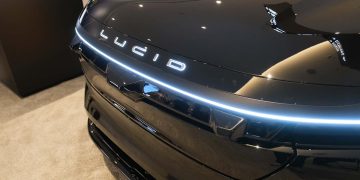


Lucid Motors, renowned for its cutting-edge electric vehicles, is grappling with software issues in its flagship model, the Lucid Gravity. Despite offering class-leading range, efficiency, and fast-charging capabilities, the Gravity debuted with significant technical glitches, including a malfunctioning key fob that sometimes failed to recognize the car, preventing owners from driving it.
At CES 2026, Lucid’s interim CEO, Marc Winterhoff, acknowledged the challenges the company faced with the Gravity’s software. He revealed that in response to these issues, Lucid had made sweeping personnel changes, including replacing the entire software leadership team. Winterhoff said the automaker is actively addressing the problems and is “very close” to resolving them.
“We’re working through this, and we’re actually very close,” Winterhoff told reporters during the CES briefing. He confirmed that these changes were part of Lucid’s effort to improve the software experience and fix the issues that were affecting the Gravity’s performance.
While the issues with the key fob and other glitches initially held back the Gravity from earning top honors at the InsideEVs Breakthrough Awards, Lucid has released several over-the-air (OTA) software updates since the vehicle’s launch. The latest update, version 3.3.20, addresses two of the biggest issues: key fob detection and inconsistent unlocking, both of which had caused significant inconvenience to owners.
Winterhoff noted that a second OTA update is expected at the end of January 2026, with another planned for March 2026. “Our expectation is that for the Gravity, we will be over the hump by the end of January, latest, latest, end of March,” he added.
The key fob issue, which previously left owners unable to start their vehicles, has now been nearly completely resolved, according to Winterhoff. A future update will address another key issue: the key fob battery draining too quickly due to continuous “pinging” with the car.
Lucid’s software challenges are not unique. As the automotive industry embraces new technologies, many automakers face similar struggles with complex software suites that control various components from different suppliers. From newcomers like Lucid to more established brands like Volvo and General Motors, the rapid advancement of EV technology often leads to growing pains in software integration.
Winterhoff emphasized that Lucid is aware of the problem and has taken drastic steps to turn things around. “It’s sometimes embarrassing,” Winterhoff admitted, “We have such a fantastic car, and under the hood, there’s tons of software that works to make the car perform like it does, and then the key fob doesn’t. I kind of laugh at it now, but believe me, I wasn’t laughing a couple of months ago.”
As Lucid Motors continues to refine its software and fix the remaining glitches, it remains to be seen how quickly these changes will restore consumer confidence in the Gravity and whether the company can maintain its status as a leader in the EV market.

