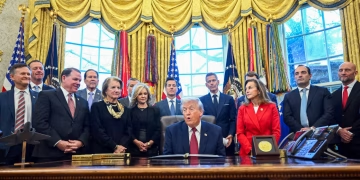


In a major move aimed at tackling rising vehicle prices, President Donald Trump has unveiled plans to roll back the fuel efficiency standards for passenger vehicles. The decision, which comes as part of the administration’s broader efforts to curb inflation and address affordability concerns, is expected to have significant implications for the U.S. auto industry and its consumers.
The Impact of Fuel Efficiency Rules on Car Prices
On December 4, 2025, President Trump stated that the current fuel efficiency regulations, which were introduced with the goal of reducing carbon emissions, had been driving up car prices. He pointed to the strain these rules have placed on the auto industry, leading to higher production costs that are ultimately passed on to consumers.
The average price of a new vehicle in the U.S. reached a historic high in October 2025, surpassing $50,000 for the first time, according to Kelley Blue Book. While the higher prices have not deterred all consumers, many price-conscious buyers have been pushed out of the market, with more opting for used cars instead. The rollback of these standards is seen as a way to bring down the cost of new vehicles, making them more accessible to American households.
Political Context: Addressing Voter Concerns Over Affordability
The announcement comes amid growing political pressure to address the rising cost of living. The Democrats’ strong showing in recent elections has highlighted voter frustration over high prices, particularly in sectors like food, housing, and transportation. With inflation still a significant concern, Trump’s administration is taking steps to respond to these issues directly.
In addition to the proposed fuel efficiency rollback, the White House has already taken measures to address food prices by cutting tariffs on imported goods, including food products. The broader aim is to ease inflationary pressures across the economy, and the rollback of fuel efficiency standards is part of this larger effort to reduce costs for consumers.
Understanding the Rollback of Fuel Efficiency Standards
The rollback of fuel efficiency standards, particularly for the 2031 model year vehicles, will lower the long-term targets for car manufacturers. The new rules are designed to reduce the pressure on automakers to meet stringent emissions targets, thereby lowering production costs. According to the Department of Transportation, the proposal is expected to save consumers $109 billion, which could equate to a reduction of approximately $1,000 in the cost of a new vehicle.
However, experts in the automotive industry, including Mark Schirmer from Cox Automotive, have stated that while these changes could help lower car prices in the future, the impact will not be felt immediately. Automakers will likely adjust their long-term strategies and product development plans, but for now, vehicle prices are expected to remain high.
The Reclassification of Crossovers and Small SUVs
As part of the rollback, the administration also plans to reclassify certain vehicles, including crossovers and small SUVs, from light trucks to passenger cars. This move is seen as an effort to remove what the government describes as a “market distortion” that has existed for decades. By reclassifying these vehicles, the administration hopes to create a more accurate reflection of consumer preferences, which have increasingly shifted toward SUVs and crossovers in recent years.
The reclassification could have significant implications for how vehicles are taxed and regulated, further shaping the automotive market in the U.S. It also reflects the evolving nature of consumer demand, as SUVs and crossovers become the most popular choices for American drivers.
Support from the Automotive Industry
The announcement was met with support from key players in the automotive industry. Executives from major automakers such as Ford, General Motors, and Stellantis attended the White House event, praising the decision as a positive step for the industry.
Antonio Filosa, CEO of Stellantis, Jim Farley, CEO of Ford, and John Urbanic, Executive Plant Director at General Motors, all expressed optimism that the rollback of fuel efficiency standards would help improve the economic environment for manufacturers, allowing them to produce more affordable vehicles. They also noted that the move could lead to increased production capacity, greater job creation, and a stronger domestic automotive sector.
A Mixed Response: Challenges for Smaller Merchants and Consumers
While the rollback is expected to benefit larger automakers, some industry experts have raised concerns about the potential challenges for smaller merchants and consumers. John Lunn, CEO of Gr4vy, a payments orchestration startup, noted that many small retailers and consumers could still face challenges in accessing more affordable vehicles due to the broader economic environment. Even with lower vehicle prices, ongoing inflation and other cost-of-living issues may limit the ability of many Americans to afford new cars.
Furthermore, Lunn emphasized that smaller merchants who rely on the auto industry for business might not see immediate benefits from the changes. While the policy is aimed at reducing production costs for automakers, its impact on local businesses and consumers will take time to unfold.
The Road Ahead: Will the Rollback Be Enough?
The rollback of fuel efficiency standards is a significant step, but its long-term impact on the auto industry and the wider economy remains uncertain. While it is expected to help lower vehicle prices, it is unclear how soon these benefits will be felt by consumers. Additionally, the move will need to go through a formal rulemaking process before it can be fully implemented, which could take months or even years.
For now, car buyers will likely continue to face high prices, especially for new vehicles. However, with the continued focus on reducing regulatory costs, cutting tariffs, and boosting domestic production, there may be hope for more affordable options in the future. The ultimate success of this policy will depend on its ability to balance environmental goals with economic realities.

