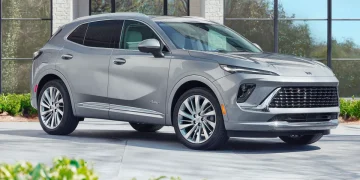


In a significant shift for General Motors (GM), the production of the popular Buick Envision compact SUV will be relocated from China to the U.S. by 2028. This move comes as part of GM’s strategy to mitigate the impact of tariffs that have been driving up the cost of the vehicle and affecting sales.
Currently, the Buick Envision is assembled at the SAIC-GM Jinqiao South plant in Shanghai, China, and is exported to the U.S. However, under the Trump administration’s ongoing trade war with China, the SUV faces a hefty tariff rate of 47.5%, consisting of several layers: a 2.5% standard duty, a 25% Section 301 tariff, and a 20% reciprocal tariff imposed as part of the International Emergency Economic Powers Act. These tariffs were originally designed to encourage U.S. manufacturing, but they have instead led to significant price hikes for American consumers.
The Impact of Tariffs on Buick Envision Sales
The tariffs have forced GM to increase the price of the Buick Envision several times. The latest model, the 2026 Buick Envision, now costs approximately $5,000 more than the previous version due to the ongoing tariff pressure, according to Kelley Blue Book. In addition to the price hikes, the automaker also raised the destination charge to $1,995, further increasing the vehicle’s cost for American buyers.
The price increases have had a significant negative impact on the Envision’s sales. GM reported a 60.9% drop in Buick Envision sales in Q4 2025, with only 5,054 units sold, compared to the previous year. For the full year, sales were down 11.4%, totaling just 41,924 units sold. This decline is directly linked to the higher price point, as more consumers are hesitant to pay the premium caused by the tariffs.
A Strategic Move Toward Onshoring and U.S. Manufacturing Growth
In response to these challenges, GM has made the decision to move production of the Buick Envision to its Fairfax Assembly Plant in Kansas City, Kansas, starting in 2028. This move is part of a broader initiative to strengthen GM’s domestic manufacturing capabilities and reduce reliance on overseas production, particularly as the company seeks to alleviate the financial strain caused by tariffs.
GM’s spokesperson Kevin Kelly emphasized that this shift aligns with the company’s larger efforts to boost U.S. manufacturing capacity and create jobs within the U.S. economy. He also pointed out that the company has already invested $5.5 billion in its U.S. manufacturing facilities in the past year. By moving production to Kansas, GM aims to deliver greater value to U.S. consumers and reduce the financial burden caused by tariffs on imported vehicles.
GM’s Larger Manufacturing Strategy and Investment Plans
The decision to relocate the Buick Envision production is part of GM’s broader strategy to adjust its product lineup in response to evolving market conditions, including the rise of electric vehicles (EVs) and growing consumer demand for SUVs and trucks. GM announced in 2025 that it would invest $4 billion over two years to enhance its manufacturing capacity in the U.S. This investment will enable GM to produce both gas and electric vehicles more efficiently while expanding its focus on its more profitable full-size truck and SUV segments.
Additionally, GM has planned a major restructuring of its North American product strategy, with an expected charge of $7.1 billion for 2025. This restructuring includes $1.1 billion in non-EV-related charges tied to the company’s realignment of its China joint venture. As part of this realignment, GM also aims to produce 2 million vehicles annually in the U.S. once these investments are completed, bolstering its presence in both the traditional and electric vehicle markets.
What’s Next for the Buick Envision?
While GM has yet to provide full details on the timeline and specifics of the U.S.-built Buick Envision, the move marks a significant milestone in the automaker’s strategy to improve its competitive position in the U.S. market. The relocation of production will likely help reduce the vehicle’s price and make it more appealing to U.S. consumers, addressing the current sales slump.
As GM prepares for the transition, it will continue to monitor market conditions and adjust its plans accordingly. In the meantime, the automaker is working to ensure that its domestic production lines are ready for the shift in 2028, with the aim of making the U.S.-made Buick Envision a key part of its expanded manufacturing operations.

