

A Pivotal Change in Tesla’s Direction
Tesla, the global leader in electric vehicles, is taking a bold step toward the future. On January 28, 2026, CEO Elon Musk announced that the company would be ending the production of its iconic Model S sedan and Model X SUV by the second quarter of 2026. These models, which have been at the core of Tesla’s product lineup for nearly a decade, will make way for new technologies as the company shifts its focus from traditional electric vehicles (EVs) to more futuristic projects.
This move, though significant, is not entirely unexpected. As Tesla continues to grow and expand its reach into new technologies such as autonomous driving, robotaxis, humanoid robots, and artificial intelligence (AI), the company’s leadership sees a need to free up valuable production space for these cutting-edge initiatives. The Fremont, California factory, which has long been the birthplace of the Model S and X, will soon be retooled to manufacture Tesla’s Optimus humanoid robots, marking a dramatic pivot in Tesla’s strategy.
Tesla’s Legacy Models: The End of an Era
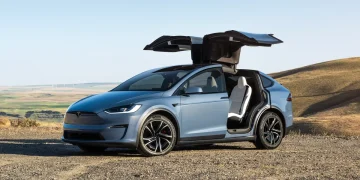
The Model S and Model X have been monumental in establishing Tesla as a household name in the EV market. The Model S, launched in 2012, was one of the first electric sedans to offer long-range capabilities and luxury features, setting new standards for electric vehicles. The Model X, introduced in 2015, quickly became known for its innovative falcon-wing doors and all-wheel drive system, appealing to consumers looking for a high-performance electric SUV.
However, as the EV market matures and competition intensifies, these models have become less central to Tesla’s business. In 2025, the two models accounted for only 3% of Tesla’s total production of 1.65 million vehicles, reflecting a shift in consumer preferences. Tesla has sold fewer units of these models in recent years, especially as the company introduces more affordable and innovative options, including the popular Model 3 and upcoming Cybertruck.
Despite the end of production, Tesla has committed to continuing support for existing Model S and Model X owners. Musk emphasized that Tesla would still provide maintenance, software updates, and customer service to ensure that current owners can enjoy their vehicles for years to come.
The Role of the Fremont Factory in Tesla’s Future
The Fremont factory, which has been pivotal in producing Tesla’s first-generation vehicles, will be retooled for a new mission: the mass production of Tesla’s Optimus humanoid robots. Musk has long championed the potential of AI and robotics, and the shift in focus at Fremont signifies Tesla’s ambition to become a leader not just in electric vehicles but in the realm of robotics and AI.
The company has set an ambitious goal to produce 1 million Optimus robots annually, a figure that underscores the scale of Tesla’s new vision. The humanoid robots, which are designed to perform a range of tasks from household chores to industrial work, will be an integral part of Tesla’s future plans to revolutionize various industries, from manufacturing to service and healthcare.
Musk sees the Optimus robots as a transformative technology that will usher in a new era of productivity and efficiency, replacing humans in dangerous or repetitive jobs while driving down costs in various sectors. Tesla’s ability to produce these robots on a massive scale will depend on the company’s ability to scale production and perfect the necessary technology.
Transitioning to AI and Autonomous Vehicles
While the shift away from traditional EVs is a major development for Tesla, the company’s long-term vision has always been centered on AI and automation. In the coming years, Tesla plans to launch its Cybercab—a fully autonomous vehicle designed specifically for ride-hailing. The Cybercab will not have a steering wheel or pedals, and Musk envisions it as a crucial part of Tesla’s efforts to dominate the global autonomous vehicle market.
Musk believes that autonomous driving will play a central role in the future of transportation, and the company’s focus is shifting towards vehicles that can drive themselves without human intervention. He has made it clear that Tesla will not just be an electric vehicle company but a full-fledged AI-driven tech company, with autonomous vehicles, humanoid robots, and AI compute clusters at the heart of its strategy.
The Cybercab will be designed for ride-hailing services, with an emphasis on efficiency and affordability. Musk has argued that the two-seater Cybercab will be the most efficient form factor for cost-per-mile economics, addressing the issue of underutilized vehicle capacity in traditional ride-hailing services. With no need for a driver, Tesla’s autonomous ride-hailing network could be a game-changer in the transportation industry.
Cybertruck and Its Evolving Role in Tesla’s Strategy
The Cybertruck, Tesla’s highly anticipated electric pickup, also has a critical role to play in the company’s shift towards autonomy. Musk has indicated that the Cybertruck will eventually be used in autonomous commercial applications, including cargo delivery and last-mile logistics. As autonomous vehicles become more widespread, Tesla’s vehicles will likely take on new roles that extend beyond personal transportation, including in the logistics and freight sectors.
The Cybertruck’s rugged design, coupled with its electric powertrain, positions it as an ideal vehicle for these applications. Musk has previously discussed the possibility of using autonomous Cybertrucks for localized cargo delivery, transforming how goods are transported in urban and suburban areas. The shift towards commercial autonomy could further solidify Tesla’s role as a leader in both consumer and industrial electric mobility.
Tesla’s Energy Business: A Record-Breaking Year
While Tesla’s automotive operations remain at the core of its business, the company’s energy storage business is also seeing impressive growth. In 2025, Tesla’s energy storage division reported a record gross revenue of $12.8 billion, a 26.6% year-over-year increase. Tesla’s investment in energy storage is part of its broader strategy to expand its footprint in the renewable energy sector, leveraging its expertise in battery technology to support the transition to sustainable energy.
Tesla’s energy storage products, including the Powerwall and Megapack, are in high demand for use in AI data centers, which require reliable and sustainable energy sources. Musk has indicated that the company plans to continue investing heavily in its energy business, with billions of dollars allocated for expansion in 2026. This growing division will complement Tesla’s electric vehicle offerings and contribute to the company’s mission of accelerating the world’s transition to sustainable energy.
Capital Investments and the Road Ahead
As Tesla prepares for its next chapter, it is investing heavily in research, development, and production. Musk has forecasted that the company’s capital expenditure for 2026 will exceed $20 billion, a significant increase from previous years. This funding will go toward expanding production capacity for Optimus robots, developing the Cybercab, and scaling the company’s energy storage business.
Tesla’s commitment to these ambitious projects is a reflection of Musk’s long-term vision for the company. Despite the challenges faced by the wider automotive industry, Tesla continues to position itself at the forefront of technological innovation, driven by its pursuit of autonomous vehicles, humanoid robots, and AI-powered solutions.
A Bold Vision for the Future
Tesla’s decision to end production of the Model S and Model X may mark the end of an era, but it also signals the beginning of an exciting new chapter for the company. With a renewed focus on AI, robotics, and autonomous vehicles, Tesla is positioning itself as a leader not just in electric mobility, but in the broader tech landscape.
Elon Musk’s bold plans for the future are ambitious, and if successful, they could revolutionize not only the automotive industry but also sectors like transportation, logistics, and robotics. As Tesla continues to innovate and push the boundaries of what’s possible, the world will be watching closely to see if the company can deliver on its promises and reshape the future of mobility.

