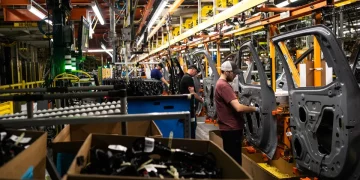


Auto industry disruption has reached unprecedented levels, making the automotive sector the most disrupted industry in the world for the second consecutive year. That is the central finding of AlixPartners’ 2026 Disruption Index, which highlights mounting pressure on executives navigating a rapidly shifting landscape.
Dan Hearsch, global co-leader of the automotive and industrial practice at AlixPartners, discussed the findings on the Shift podcast. He described an industry undergoing structural change at a speed few leaders have experienced before.
Why Auto Industry Disruption Is Intensifying
According to the Disruption Index, the automotive sector now faces overlapping challenges that are transforming its foundation. Electrification, digitalization, supply chain instability and geopolitical tension are converging at once.
Executives are not only managing new vehicle technologies such as electric platforms and software-defined systems. They are also responding to unpredictable regulatory shifts, global trade tensions and fierce competition from emerging Chinese manufacturers.
Hearsch noted that the scale and speed of change have left many leaders uncertain about their long-term roles. In previous cycles, industry transitions unfolded over decades. Today, transformation happens within a few years.
Executive Anxiety in a Shifting Landscape
The report found that many automotive executives fear their positions could be at risk as business models evolve. Traditional strategies no longer guarantee stability.
Automakers must rethink product timelines, supplier relationships and global production strategies. At the same time, software capabilities and data services are becoming central to vehicle design and revenue generation.
This level of auto industry disruption creates internal pressure. Leadership teams are expected to deliver growth while fundamentally reshaping operations.
Competitive Pressure and Global Realignment
The competitive landscape has intensified. Chinese brands are expanding aggressively into European markets, while legacy automakers struggle to balance investment in electric vehicles with profitability concerns.
Tariffs and shifting trade agreements further complicate global supply chains. Manufacturers must adapt to changing consumer demand and rising costs while maintaining innovation momentum.
Industry experts say this environment demands faster decision-making and more flexible strategies. Companies that fail to pivot quickly risk falling behind.
A New Era for Automotive Leadership
Auto industry disruption is forcing executives to develop new skill sets. Leaders must understand software ecosystems, battery technology, sustainability frameworks and advanced manufacturing systems.
The traditional focus on mechanical engineering and production efficiency remains important. However, strategic agility and digital fluency now define competitive advantage.
Hearsch emphasized that disruption does not automatically signal decline. Instead, it represents opportunity for companies willing to adapt decisively.
Auto industry disruption has reshaped the global automotive landscape for the second straight year. As innovation accelerates and competition intensifies, executives face mounting pressure to evolve.
The coming years will test whether established automakers can transform fast enough to thrive in a radically different world. For industry leaders, stability is no longer guaranteed — adaptability is the new currency of success.

