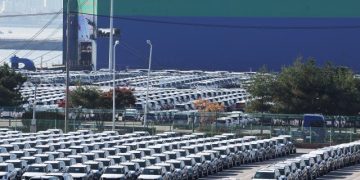


The Iran Impact Carmakers story is quickly becoming a real concern for the global auto industry. Rising tensions involving Iran now threaten trade stability in the Middle East. As a result, automakers that depend on smooth shipping routes and steady demand in the Gulf face new risks.
At first glance, the conflict may appear distant from the auto sector. However, the Middle East remains one of the most important overseas markets for several Asian manufacturers. Therefore, instability in the region can quickly affect production planning, logistics, and sales forecasts.
Toyota, Hyundai, and several leading Chinese brands built strong positions in Gulf markets over many years. The Iran Impact Carmakers scenario now places those gains under pressure. If tensions escalate further, the region’s importance could transform from a strength into a vulnerability.
Toyota remains the most dominant brand in the region. Its SUVs and pickup trucks fill roads across Saudi Arabia and the United Arab Emirates. Consequently, the company holds roughly 17 percent of the local market. Hyundai also enjoys strong demand. The South Korean automaker sells compact sedans, family crossovers, and SUVs that appeal to Gulf buyers. Together, those models represent about 10 percent of new car sales.
Meanwhile, Chinese automakers expanded aggressively across the Middle East in recent years. Companies such as BYD, Chery, and SAIC used the region as a gateway for international growth. Their strategy relied heavily on exports. In fact, the Middle East accounts for about 17 percent of China’s passenger car exports. Because of that exposure, the Iran Impact Carmakers situation may hit Chinese brands particularly quickly.
Logistics present the first major challenge. The Strait of Hormuz sits at the center of the global energy and shipping network. Oil tankers move through this narrow channel every day. However, the route also handles vehicle shipments and parts deliveries destined for Gulf markets.
If conflict disrupts the strait, the consequences could spread across the auto supply chain. Analysts estimate that shipping delays could extend transit times by ten to fourteen days. As tensions rise, freight insurance costs also increase. Shipping companies may charge higher rates to compensate for the additional risk. Therefore, the Iran Impact Carmakers situation directly affects the cost and reliability of vehicle deliveries.
Japanese automakers may face fewer immediate risks compared with some competitors. Their supply chains often include diversified shipping routes and established regional partners. Nevertheless, higher shipping costs and longer delivery times could still affect profit margins.
Chinese manufacturers face a different set of pressures. Many of them expanded exports aggressively to offset slower growth at home. The Middle East became one of their fastest-growing markets. Consequently, the Iran Impact Carmakers scenario arrives at an especially sensitive moment.
If the conflict persists, demand could soften across Gulf countries. Consumers often delay major purchases during periods of political uncertainty. Automobiles represent one of the largest household expenses. Therefore, even temporary hesitation among buyers can affect dealer traffic and factory output.
In addition, manufacturers must reconsider pricing strategies. Higher shipping costs may force companies to choose between absorbing expenses or raising prices. Either option carries risks. Absorbing costs reduces profit margins. Passing them on to customers may weaken demand. In both cases, the Iran Impact Carmakers challenge complicates financial planning for export-driven brands.
Oil prices introduce another layer of uncertainty. The Middle East conflict could push energy costs higher. If fuel prices climb significantly, consumer preferences may shift. Large SUVs and powerful engines traditionally dominate Gulf markets. Toyota and Hyundai both rely heavily on these segments.
However, higher fuel costs could gradually reshape buying habits. Buyers may begin considering hybrids, smaller engines, or electric vehicles. Such transitions rarely happen overnight. Yet sustained fuel pressure often changes long-term demand patterns. As a result, the Iran Impact Carmakers situation may influence not only logistics but also product strategies.
The broader economic mood also plays a role. Political instability tends to create caution among households and businesses. When uncertainty rises, consumers often postpone large purchases. Automobiles fall squarely into that category.
Therefore, even a modest slowdown in showroom traffic could ripple through the global auto industry. Factories in Japan, South Korea, and China depend on steady export demand. When overseas markets slow, production schedules must adjust quickly. The Iran Impact Carmakers situation could therefore reach far beyond the Gulf region.
For now, most automakers continue monitoring developments rather than making dramatic strategic shifts. The conflict remains fluid, and shipping routes continue operating. However, industry planners understand how quickly conditions can change.
In an industry built on complex supply chains and global demand, geopolitical tensions often create unexpected consequences. The Iran Impact Carmakers story illustrates how events in one region can quickly influence manufacturing decisions thousands of miles away.
If tensions ease, the disruption may prove temporary. Yet if instability persists, automakers may need to rethink export strategies, logistics planning, and even product development. For companies that rely heavily on the Gulf market, the Iran Impact Carmakers challenge could become one of the defining industry pressures in the coming months.

