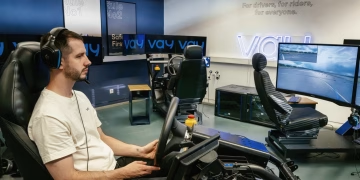


The future of mobility is arriving with remote-driven cars in Berlin. At the old Tegel airport, electric cars controlled from remote stations are already completing test drives. With a few clicks in an app, a car arrives without anyone at the wheel. Once a passenger enters, a driver’s voice greets them, and the ride begins.
That voice belongs to a trained operator like Bartek Sztendel. He sits at a control station with headphones and three large screens. Using pedals and a wheel, he steers while sensors provide real-time road feedback. In addition, the system lets him hear sounds from the car’s environment. This approach forms the backbone of Vay, a Berlin startup founded in 2018 to rethink city transport.
Vay’s service avoids waiting for full self-driving cars. Instead, customers order a car through an app, and a remote driver delivers it to their location. They then drive themselves, and when finished, a remote operator handles the return and parking. As a result, users avoid the hassle of searching for parking. The company also claims the service will cost about half the price of today’s car-sharing options.
Germany recently approved legislation for commercial use of remote-driven cars in designated areas, starting December 1. Compared with US laws that allow robotaxis in San Francisco or Phoenix, the German approach is more cautious. However, it still represents a significant step for a leading European car-producing nation. Consequently, it signals a growing readiness to test new forms of mobility.
Thomas von der Ohe, Vay’s CEO and co-founder, says the goal is to reduce car ownership. He believes people will skip buying a second car, or even the first, if they have access to affordable, flexible mobility. Moreover, he argues that fewer private cars will make cities more sustainable and less congested.
Drivers remain essential to the company’s model. Many have switched from taxi services, trucking, or ride-hailing. For them, remote driving provides safety, stable hourly pay, and better working conditions. Female drivers in particular see it as a safer alternative to on-street driving. Meanwhile, the job also appeals to truck drivers tired of long-distance travel.
Training standards are strict. Each driver must complete hundreds of test miles before qualifying. Gaming experience helps with coordination, yet calmness and responsibility matter more. Furthermore, safety systems include a large red stop button that halts the car instantly in emergencies.
The launch of remote-driven cars in Berlin represents an important milestone for European mobility. With a clear regulatory framework, innovative technology, and motivated drivers, Berlin could set the model for safer, cost-effective, and flexible urban car use.

