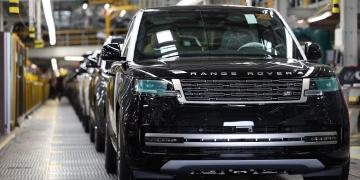


UK car production plunged to its lowest level since 1956 in 2025, driven by a major cyberattack on Jaguar Land Rover (JLR) and ongoing pressure from U.S. tariffs. The sharp drop marks the worst year for British auto manufacturing in nearly seven decades.
The cyberattack severely disrupted JLR’s operations early in the year. It forced temporary plant closures and halted vehicle assembly across multiple sites. As Britain’s largest carmaker, JLR’s shutdown had an outsized impact on national output. Industry data shows total UK vehicle production fell well below 700,000 units—levels not seen since the post-war era.
Compounding the crisis, U.S. trade policies continued to weigh on exports. Tariffs imposed under President Donald Trump’s administration raised costs for UK-built vehicles entering the American market. This reduced competitiveness and led some manufacturers to scale back production plans.
The UK car production decline also reflects deeper structural challenges. Post-Brexit trade barriers, labor shortages, and slow progress in transitioning to electric vehicles have weakened the sector’s resilience. Investment has lagged as companies face uncertainty over future regulations and global demand.
Industry leaders warn that without urgent government support, the downturn could become permanent. The Society of Motor Manufacturers and Traders (SMMT) called for targeted relief, including cybersecurity funding, export incentives, and clearer EV transition timelines.
In summary, the 2025 collapse in output stems from both acute shocks and long-term vulnerabilities. The UK car production decline is not just a cyclical dip—it signals a critical juncture for one of Britain’s oldest industrial sectors. Without coordinated action, the country risks losing its automotive manufacturing base entirely.
READ: BMW Defies EV Transition: V8 and V12 Engines Remain Central to Its Strategy

